01
Too much repetition
To find one useful detail, a shopper reads through dozens of near-identical reviews.

Gravity AI pulls the key points out of reviews and shows who the product fits. Shoppers lean not only on the description, but on the experience of people who already bought it.
The choice problem
01
To find one useful detail, a shopper reads through dozens of near-identical reviews.
02
Opinions about the product mix with comments on delivery, packaging and store service.

03
They are missing from the product page and the shortlists, so doubt stays.

A takeaway you can verify
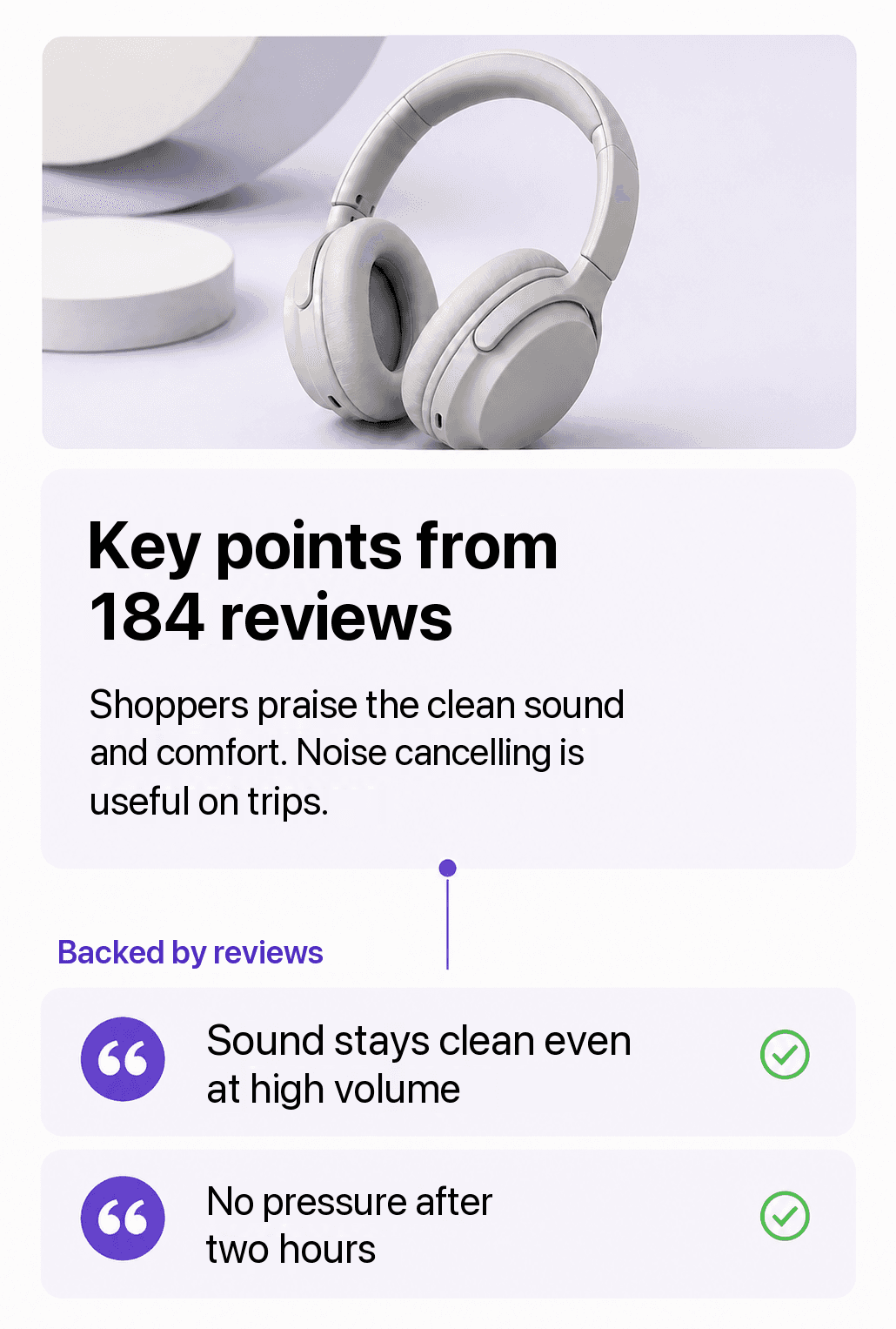
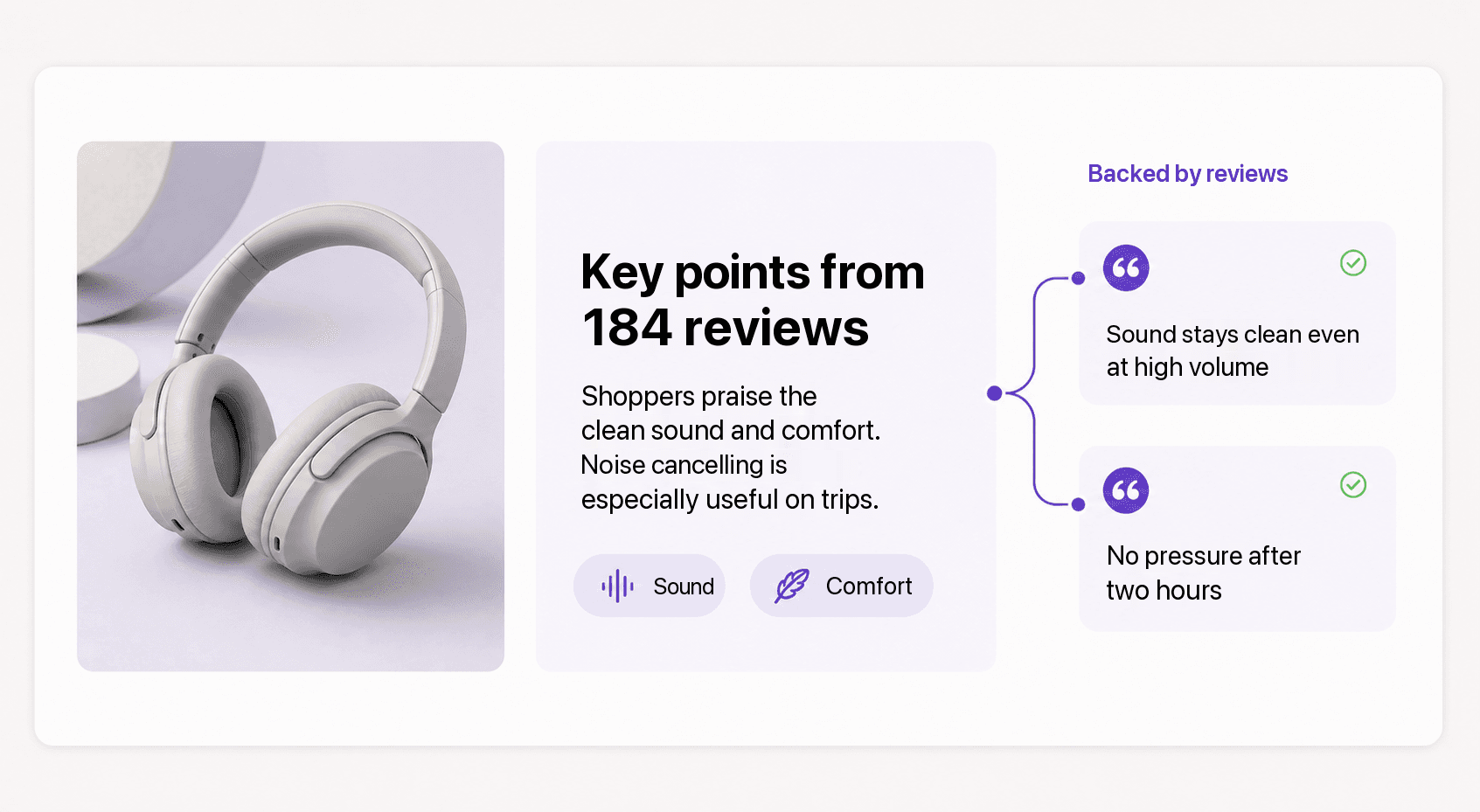
The summary shows who the product fits, and the quotes show which reviews it rests on.
On the product page and in shortlists
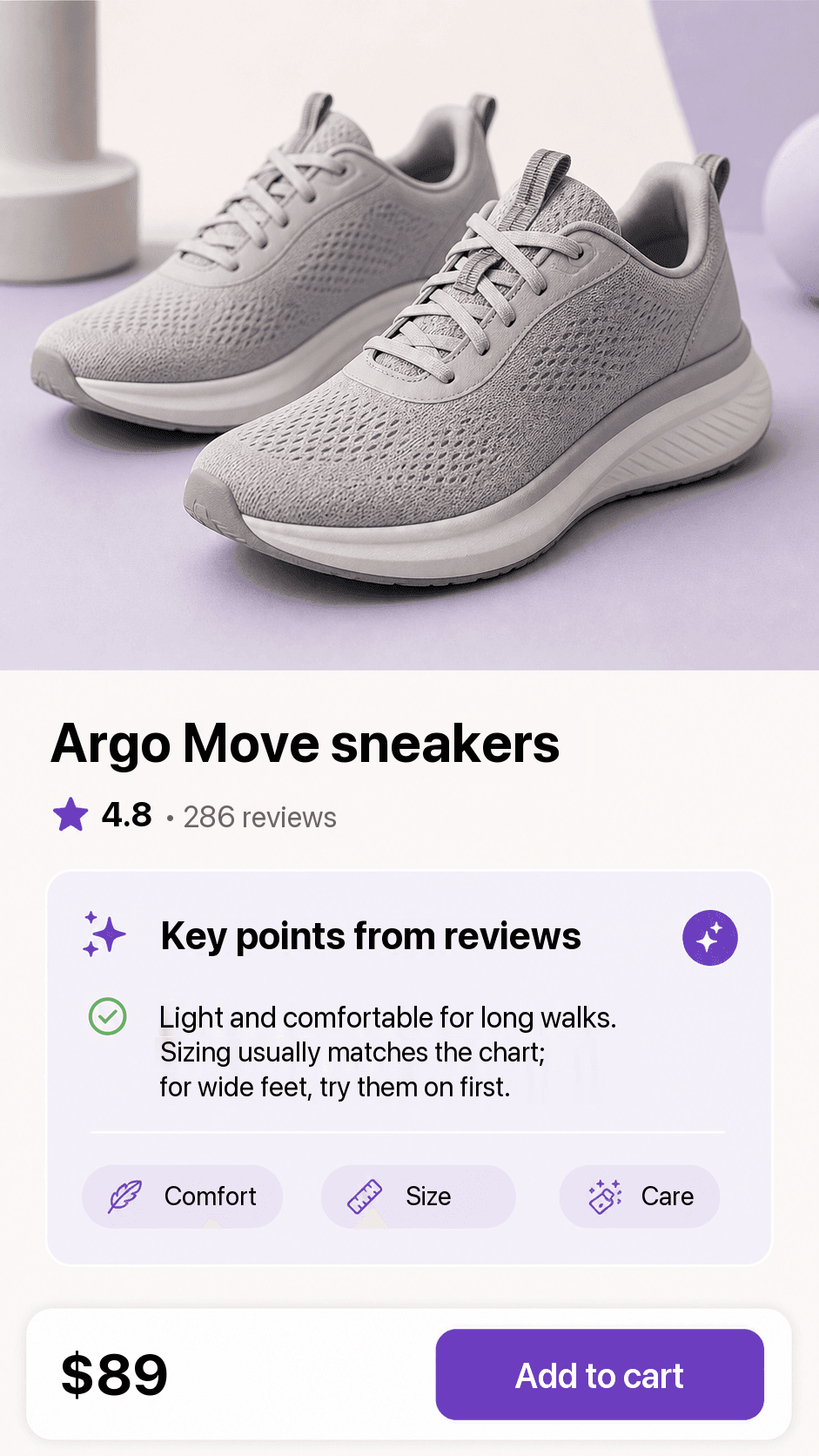
On the product page a shopper sees whether the item fits. In the assistant they find alternatives for their request, based on what other buyers report.
01 - Product page
A shopper sees right away who the product fits, what people value in it and what to keep in mind, without reading dozens of reviews.
02 - Shopping assistant
If the first product does not fit, the assistant offers other options for the shopper's job and explains each pick from reviews.
The shopper asks
Looking for a dry skin cream with no strong scent
Ceramide moisturizing cream
Shoppers with dry skin often mention long-lasting hydration with no tight feeling.
Fragrance-free gel cream
Reviews often call out the light texture and an almost unnoticeable scent.
Nourishing repair cream
Works for winter care, though some shoppers find the texture too heavy.
How it works
We take them as a file or connect to your store system, then match each review to a product.
We separate views on the product itself from comments on delivery and store service.
We show who the product fits, what people praise it for and which limits come up in reviews.
Takeaways are rebuilt ahead of time, so the assistant answers the shopper with no extra delay.
Pilot run
To scope it, pick the products and set the bar for rating and review count.
We start with one category or a small group of products.
We decide which product ratings make it into the pilot run.
We set the minimum review count that is enough to analyze.
We count the matching products and price out the launch.
For the shopper
For the store
The system reads the reviews for a product and writes a short takeaway: who it fits, what people praise it for and what may disappoint. Every point can be backed with shopper quotes.
The summary sits on the product page next to the rating and the reviews. The same knowledge can feed search, shortlists and the shopping assistant's answers.
Yes. Every theme or point can carry quotes from the original reviews.
The assistant weighs opinions on the traits that matter for a given request and explains why each product made the shortlist.
No. The summary helps find the needed detail faster, while the original reviews stay available for checking.
Products with a lot of reviews or several criteria that matter at once: beauty, electronics, home appliances, apparel, footwear and pet supplies.
No. Reviews are analyzed ahead of time and refreshed on a schedule. During a conversation the assistant uses takeaways that are already built.
You need reviews as a file or a connection to your store system. Then we pick the products, set the selection rules and price out the launch.
We take a few products and build the answers to the questions that come up before purchase, shown on the product page and in a list of alternatives.